
You're Closer to Owning Than You Think
Most Canadians overestimate how far they are from homeownership. Here's why the gap is smaller and more solvable than you've been told.
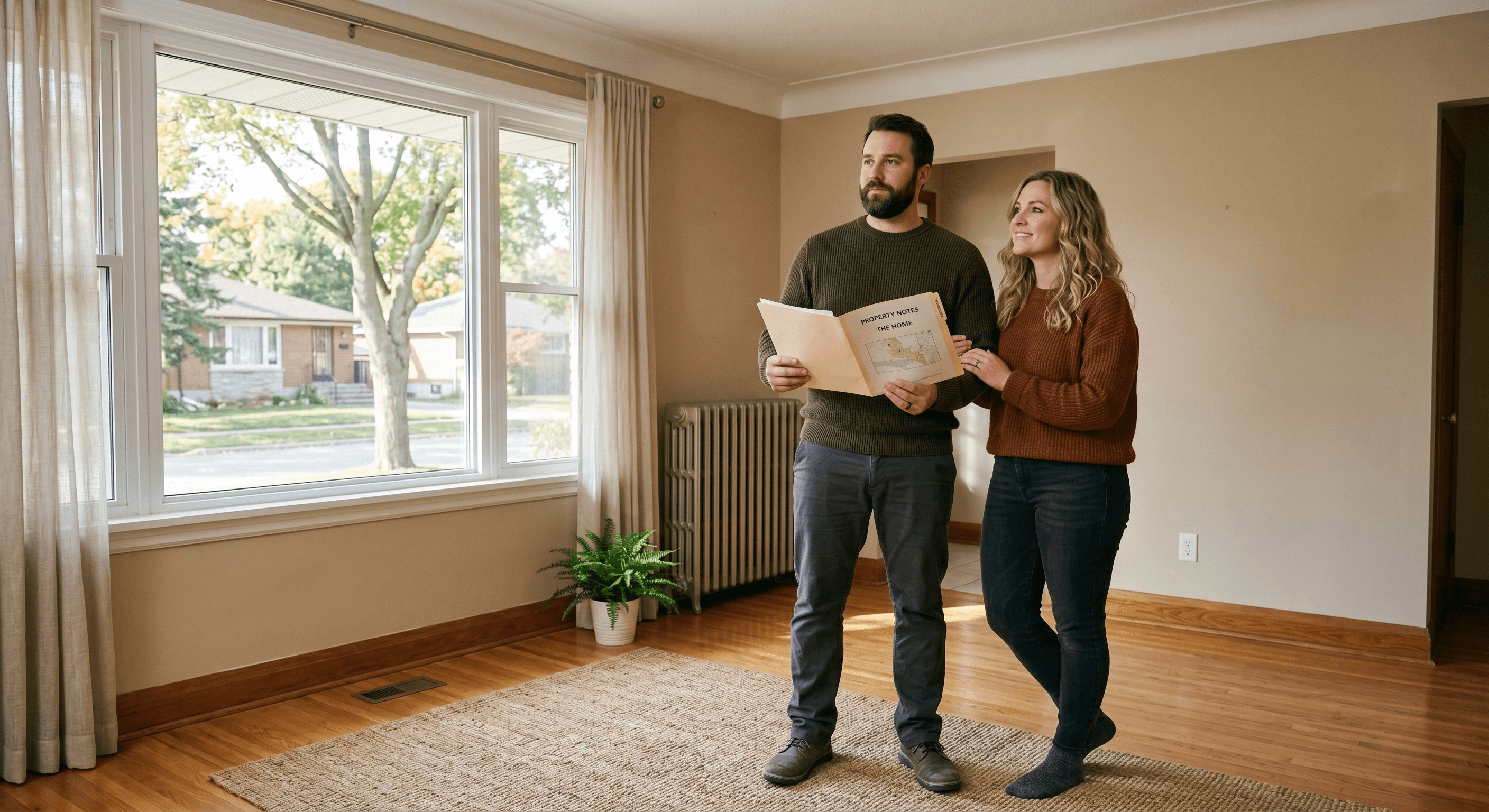
Most people overestimate how far they are from homeownership. Here's what's actually standing in the way and why the gap is smaller than you've been told.
The Story You've Been Told
There's a version of homeownership that gets repeated so often it starts to feel like the only version.
You need perfect credit. You need 20% down. You need to have cleared every financial misstep before a lender will even look at you.
It's not wrong, exactly. That path exists. It works for some people.
But it's not the only path.
And for a lot of Canadians sitting on $25,000 to $50,000 in savings with solid, consistent income, the real barrier isn't what they're missing financially. It's what they haven't been shown is possible.
What "Ready to Buy" Actually Looks Like
Banks have a specific profile they're optimized to approve. It's built around their risk tolerance, their regulatory requirements, and a stress test designed for borrowers who are already in a strong position.
If you don't fit that profile today, they decline. Not because you can't afford a home. Not because you're irresponsible with money. But because you don't match a formula.
> That's a positioning problem, not an affordability problem.
>
> The difference matters. Because a positioning problem can be solved, strategically, systematically, and often faster than people assume.
The Math That Surprises People
Here's a simple way to look at where you actually stand. At Clover, we use a straightforward affordability formula:
> Clover Affordability Formula
> Annual Income × 4.5 + Down Payment = Maximum Home Price
So if you're earning $120,000 a year and you've saved $40,000, the math looks like this:
| $120,000 × 4.5 | $540,000 |
| + Down Payment | + $40,000 |
| Maximum Home Price | $580,000 |
For most of Southwestern Ontario and Alberta including many solid, family-friendly neighbourhoods, that puts real homes within reach these days.
Not someday homes. Right-now homes, in real communities, at real prices.
The question isn't whether you can afford a home. The question is whether the structure you're trying to use can see that.
What You Actually Need and What You Don't
Here's where the awareness gap does the most damage.
Most people assume the entry checklist looks like this:
And to be fair, if you're going straight to an A-lender mortgage, that list is accurate.
But there are structured alternatives that let you enter the market now, build toward that profile, and convert to a conventional mortgage when you're ready.
You don't need 20% down to start.
Minimum option deposits can be as low as 5% with no closing costs.
You don't need perfect credit on day one.
You need a realistic plan to get there by the end of the program, typically two to four years.
You don't need to wait until everything lines up perfectly.
You need to start moving while there's still time to move.
The Rent-to-Own Bridge
A structured rent-to-own program is not a fallback. It's a bridge.
You move into the home now. You lock in today's purchase price. Every month, a portion of what you pay builds toward your down payment. And at the end of the program, when your credit is where it needs to be and your savings have grown, you convert to a conventional mortgage and take ownership.
Done right, rent-to-own isn't a detour around homeownership. It's a direct route to it.
At Clover, every program is built with one goal: getting you to a point where an A-lender will approve you. That's not just the intention, it's the design. The affordability formula, the equity credit structure, the timeline, the guidance, all of it points toward that conversion.
> If a program isn't structured around your eventual mortgage approval, it's not a bridge. It's a holding pattern.
Why the Gap Is Almost Always Awareness
We talk to a lot of people who've spent years assuming they weren't ready. Years of renting while prices climbed. Years of watching the goalpost move because they were waiting for a signal that homeownership was finally within reach.
What stops most of them isn't income. It isn't savings. It isn't even credit.
It's not knowing that a different entry point exists.
If you're earning strong income and you've managed to save even $25,000 to $50,000, you are not as far off as you've been told.
The biggest shift isn't financial. It's informational and mindset.
Once you see clearly what the path looks like, the actual steps, the actual timeline, the actual numbers, everything changes. Not because your situation changed. Because your understanding of your situation changed.
5 reasons banks decline good buyers.
The bank said no - you're dream didn't have to.
Is rent-to-own a good idea? Check out this article for the answer.
Find out where you actually stand. If you're earning good income and have some savings set aside but keep running into walls with traditional lenders, the next step isn't to wait — it's to get a clear picture of what a structured path to ownership looks like for your situation. Start here.
Related Articles
What Is Causing the Housing Issues in Canada?
Canada's housing problem is really three problems at once. CMHC data on first-time buyers, stressed mortgage holders and seniors shows why.
Rent-to-Own vs Renting and Saving: Which Path to Homeownership Is Right for You?
Choosing between a rent-to-own agreement and traditional renting while saving for a down payment can significantly impact your path to homeownership. This comprehensive guide breaks down both options to help you make an informed decision.
Why Banks Decline Good Buyers: 5 Real Reasons in Canada
Solid income, bills paid on time and still declined? Here are the 5 real reasons Canadian mortgage applications get rejected, and how each one is fixable.